How to Write a CAAPID Personal Statement That Gets Interviews (2026)
- Dr Dev Prajapati
- Jan 24
- 21 min read
You're staring at a blank screen. 4,500 characters. One chance to convince admissions committees you deserve a seat in their program.
What do you write?
Most international dentists make the same mistake. They write what they think admissions wants to hear:
"I have always been passionate about dentistry since childhood..."
"My grandmother's dental problems inspired me to pursue this career..."
"I want to serve underserved communities and give back..."
These statements get ignored. Every. Single. Time.
Admissions committees have read these lines ten thousand times. They're forgettable. They're generic. They could have been written by any of the thousands of international dentists applying through CAAPID.
This guide shows you how to write a CAAPID personal statement that actually gets interviews. Not generic advice — a real framework with examples.
How to Write a CAAPID Personal Statement: A strong CAAPID personal statement (1) hooks the reader in the first sentence, (2) tells YOUR unique story rather than generic claims, (3) shows who you are as a person, not just a dentist, (4) demonstrates why dentistry through specific experiences rather than stating it, and (5) stays under the 4,500 character limit. Avoid clichés like "I've always been passionate" and "my grandmother inspired me." Focus on authenticity, specific examples, and showing character.
[TABLE OF CONTENTS]
What is a CAAPID Personal Statement?
How Long Should a CAAPID Personal Statement Be?
What Should a CAAPID Personal Statement Include?
What Do Admissions Committees Look For in a Personal Statement?
CAAPID Personal Statement Format and Structure
How to Start a CAAPID Personal Statement (Opening Lines)
How to Write the Body of Your Personal Statement
How to End Your CAAPID Personal Statement
CAAPID Personal Statement Examples: What Works vs. What Doesn't
The #1 Mistake in CAAPID Personal Statements
CAAPID Personal Statement Clichés to Avoid
How to Show "Why Dentistry" Without Saying It
How to Make Your Personal Statement Unique
How to Tell Your Story in 4,500 Characters
Should I Mention Challenges or Weaknesses?
How to Write Multiple Personal Statements for Different Schools
CAAPID Personal Statement Checklist
How Long Does It Take to Write a Good Personal Statement?
Should I Hire Someone to Write My Personal Statement?
How P2A Consultancy Approaches Personal Statements
Frequently Asked Questions About CAAPID Personal Statements
1. What is a CAAPID Personal Statement?
A CAAPID personal statement is a 4,500-character essay that tells admissions committees who you are, why you want to pursue dentistry in the United States, and what makes you unique.
Your personal statement is your chance to speak directly to admissions committees. Everything else in your application — transcripts, test scores, CV — is data. Your personal statement is your voice.
Purpose of the personal statement:
What It Does | What It Doesn't Do |
Shows who you are as a person | Repeat your CV |
Reveals your character and values | List achievements |
Explains your unique journey | Make generic claims |
Demonstrates self-awareness | Tell them what they want to hear |
Makes them want to meet you | Bore them with clichés |
Why it matters:
Thousands of international dentists apply through CAAPID. Most have similar credentials — dental degrees, INBDE scores, TOEFL scores. Your personal statement is how you stand out.
When an admissions committee member finishes reading your statement, they should think: "I want to meet this person."
If they think "this sounds like everyone else," you've failed.
2. How Long Should a CAAPID Personal Statement Be?
The CAAPID personal statement has a maximum limit of 4,500 characters including spaces, which equals approximately 600-700 words.
CAAPID personal statement specifications:
Specification | Requirement |
Maximum length | 4,500 characters (including spaces) |
Approximate words | 600-700 words |
Format | Plain text |
Formatting allowed | None (no bold, italic, bullets) |
Minimum length | No minimum, but use the space wisely |
Should you use all 4,500 characters?
Approach | Recommendation |
Under 3,500 characters | Too short — you're leaving impact on the table |
3,500-4,200 characters | Acceptable |
4,200-4,500 characters | Ideal — maximizes your opportunity |
Over 4,500 characters | Not allowed — CAAPID will cut you off |
The key: Quality over quantity. Every sentence should serve a purpose. Don't pad with fluff to reach the limit, but don't leave valuable space unused either.
3. What Should a CAAPID Personal Statement Include?
Your CAAPID personal statement should include a compelling hook, your unique story, specific experiences that shaped you, insight into your character, and a clear sense of why you belong in a U.S. dental program.
Essential elements:
Element | Description |
Hook | Opening that grabs attention immediately |
Your story | The experiences that made you who you are |
Specific examples | Concrete moments, not vague claims |
Character revelation | Who you are as a person, not just credentials |
Growth and insight | What you learned, how you changed |
Connection to dentistry | Why this path makes sense for YOU |
Why U.S. | Why you want to practice in America specifically |
What NOT to include:
Avoid | Why |
Your entire life history | Too much, not focused |
Repeating your CV | They already have it |
Generic statements | Forgettable |
Excuses for weaknesses | Sounds defensive |
Negative talk about your country | Unprofessional |
Excessive praise of U.S. | Sounds insincere |
4. What Do Admissions Committees Look For in a Personal Statement?
Admissions committees look for authenticity, self-awareness, unique perspective, strong writing, and evidence that you would be a good fit for their program.
What they're really asking:
Their Question | What They Want to See |
"Who is this person?" | Your authentic self, not a performance |
"Why dentistry?" | Genuine motivation shown through story |
"Why the U.S.?" | Legitimate reasons beyond money/prestige |
"Will they succeed?" | Resilience, determination, self-awareness |
"Will they fit in?" | Professionalism, maturity, values |
"Do I want to meet them?" | Someone interesting, not generic |
The secret most applicants miss:
Dental schools want great humans, not just good dentists.
They can teach you clinical skills. They can't teach you character.
Your personal statement should reveal who you are as a person — your values, your perspective, your humanity. Technical skills and achievements belong on your CV.
Red flags for admissions committees:
Red Flag | What It Suggests |
Generic clichés | Didn't put in effort |
Identical to other applicants | Nothing unique to offer |
All achievements, no reflection | Lacks self-awareness |
Defensive about weaknesses | Poor attitude |
Sounds written by AI | Inauthenticity |
Poor writing quality | Poor communication skills |
5. CAAPID Personal Statement Format and Structure
A strong CAAPID personal statement follows a clear structure: hook, story, reflection, and connection to future.
Recommended structure:
Section | Characters | Purpose |
Hook/Opening | 300-500 | Grab attention, set the scene |
Story/Body | 2,500-3,000 | Your experiences, specific moments |
Reflection | 500-800 | What you learned, who you became |
Closing | 300-500 | Connection to future, why U.S. |
Structure breakdown:
Section 1: Hook (First 2-3 sentences)
Start with something memorable
Pull the reader into your world
Create curiosity
Section 2: Story (Middle ~70%)
Share 2-3 specific experiences or moments
Show, don't tell
Include sensory details
Reveal your character through actions
Section 3: Reflection (Toward end)
What did these experiences teach you?
How did you grow or change?
What qualities did you develop?
Section 4: Closing (Final paragraph)
Connect past to future
Why U.S. dentistry specifically
Leave a lasting impression
6. How to Start a CAAPID Personal Statement (Opening Lines)
Start your CAAPID personal statement with a specific moment, a surprising statement, or a vivid scene — never with a cliché.
Your opening line is the most important sentence in your entire application. If it's boring, they stop reading. If it's memorable, they lean in.
Opening strategies that work:
Strategy | Example |
Start in a moment | "The power went out mid-extraction." |
Surprising statement | "I became a dentist because I failed." |
Vivid scene | "At 3 AM in the emergency clinic, a father carried his crying daughter through the door." |
Question that intrigues | "What do you do when you realize everything you believed was wrong?" |
Bold declaration | "I've treated patients in three countries, and I've never felt at home — until now." |
Opening lines to NEVER use:
Cliché Opening | Why It Fails |
"I have always been passionate about dentistry..." | Everyone says this |
"Since childhood, I knew I wanted to be a dentist..." | Unbelievable and generic |
"My grandmother's dental problems inspired me..." | Overused to the point of parody |
"Dentistry is a noble profession that..." | Boring, sounds like an essay |
"I am writing to express my interest in..." | Formal and lifeless |
"Growing up in [country], I..." | Weak start |
Examples of strong vs. weak openings:
Weak: "I have always been passionate about dentistry and helping people. Since childhood, I knew I wanted to become a dentist and serve my community."
Strong: "The boy was seven years old, and he hadn't smiled in two years. His front teeth were destroyed in a fall, and his family couldn't afford treatment. When I handed him a mirror after the restoration, he cried. So did I."
The difference: The weak opening tells. The strong opening shows. The weak opening could be from anyone. The strong opening is from ONE specific person with ONE specific experience.
7. How to Write the Body of Your Personal Statement
The body of your personal statement should include 2-3 specific experiences that reveal who you are, using vivid details and reflection.
The body is where your story lives. This is the meat of your personal statement — approximately 2,500-3,000 characters.
How to structure the body:
Option 1: Chronological
Early experience that sparked interest
Formative experience during dental school
Recent experience that confirmed your path
Option 2: Thematic
Group experiences by theme (compassion, resilience, growth)
Each paragraph explores one theme with specific examples
Option 3: Single Deep Dive
One transformative experience explored in depth
Every detail unpacked for meaning
Writing principles for the body:
Principle | How to Apply |
Show, don't tell | Instead of "I'm compassionate," show a moment where compassion drove your actions |
Specific over general | "A 67-year-old farmer" not "an elderly patient" |
Sensory details | What did you see, hear, feel? |
Your actions | What did YOU do, decide, or realize? |
Reflection | What did it mean to you? How did it change you? |
Example of showing vs. telling:
Telling (weak): "I am a compassionate dentist who cares about my patients and always goes the extra mile to help them."
Showing (strong): "Mr. Sharma came to the clinic at closing time. His wife needed dentures for their daughter's wedding in three days. The lab was closed. I spent that night hand-finishing the dentures myself. When she smiled at the wedding, I understood why I chose this profession."
How many experiences to include:
Number | When to Use |
1 experience | If it's transformative and can fill the space meaningfully |
2-3 experiences | Most common and effective |
4+ experiences | Too many — becomes a list, loses depth |
8. How to End Your CAAPID Personal Statement
End your personal statement by connecting your past to your future, expressing why U.S. dentistry specifically, and leaving a memorable final impression.
Your ending is the last thing they read before deciding whether to interview you. Make it count.
What your ending should accomplish:
Goal | How to Achieve |
Connect past to future | "These experiences showed me... which is why I..." |
Explain why U.S. specifically | Genuine reasons (not just money/prestige) |
Show forward momentum | You're ready for this next step |
Leave an impression | End with something memorable |
Ending strategies that work:
Strategy | Example |
Circle back to opening | Reference your opening story with new meaning |
Vision for future | What kind of dentist you want to become |
Statement of readiness | You've prepared, you're ready |
Lasting image | A final vivid moment or thought |
Endings to avoid:
Weak Ending | Why It Fails |
"Thank you for considering my application" | Formal, expected, forgettable |
"I would be honored to attend your program" | Everyone says this |
"I promise to work hard and make you proud" | Sounds desperate |
Summarizing everything you already said | Waste of precious characters |
Generic statement about dentistry | Boring |
Strong ending example:
"That seven-year-old boy with the restored smile is now in dental school himself. Last month, he texted me a photo of his first extraction. Below the image, just two words: 'Because you.'
I don't want to just practice dentistry in America. I want to create those moments — for my patients, for my students, for the profession I love."
Why this works:
Circles back to opening story
Shows impact and legacy
Reveals character (mentorship, humility)
States motivation without being generic
Memorable final image
9. CAAPID Personal Statement Examples: What Works vs. What Doesn't
Let's look at real examples of weak vs. strong personal statement passages.
Example 1: Opening Paragraph
WEAK VERSION:
"I have always been passionate about dentistry since I was a young child. My grandmother had dental problems, and watching her struggle inspired me to pursue a career in dentistry. I wanted to help people like her and make a difference in their lives. After completing my dental education in India, I am now eager to pursue advanced training in the United States to become a better dentist and serve the community."
Why it fails:
Cliché opening ("always been passionate")
Grandmother story (overused)
Generic motivation ("help people," "make a difference")
Tells instead of shows
Could be written by any applicant
STRONG VERSION:
"The electricity died mid-procedure. No generator. No backup. Just a terrified 12-year-old girl in my chair with half an extraction complete.
I finished by flashlight, my assistant holding her phone steady while I worked by its glow. When it was over, the girl's mother pressed her hands together and bowed. 'You didn't stop,' she said. 'Others would have stopped.'
I didn't stop because stopping wasn't an option. That's the kind of dentist I am."
Why it works:
Specific, vivid moment
Action reveals character
Dialogue adds authenticity
Shows resilience without saying "I'm resilient"
Memorable and unique
Example 2: Body Paragraph
WEAK VERSION:
"During my dental career, I have gained extensive clinical experience treating patients with various dental conditions. I have performed many procedures including extractions, root canals, and restorations. I have also participated in dental camps where I provided free treatment to underserved communities. These experiences have taught me the importance of compassion and patient care. I believe that my clinical skills and dedication to helping others make me a strong candidate for your program."
Why it fails:
Lists activities without depth
No specific examples
Tells instead of shows ("taught me compassion")
Sounds like a CV in paragraph form
No personality or voice
STRONG VERSION:
"Ravi was 45, a factory worker who hadn't seen a dentist in decades. His teeth were destroyed. When he opened his mouth, the smell made my assistant step back.
I spent three hours that morning. Not on the teeth — on him. His fears. His shame. The years of being told he was 'too far gone.'
By the end, we had a plan. Twelve visits over four months. I didn't just save his teeth. I watched him transform. By visit eight, he was joking with my staff. By visit twelve, he brought his daughter — she wants to be a dentist.
Ravi taught me that dentistry isn't about teeth. It's about giving people permission to hope again."
Why it works:
One patient, explored deeply
Specific details (3 hours, 12 visits)
Shows character through action
Dialogue adds humanity
Reflection reveals insight ("permission to hope")
Memorable transformation story
Example 3: Closing Paragraph
WEAK VERSION:
"In conclusion, I believe that my passion for dentistry, clinical experience, and dedication to patient care make me an ideal candidate for your Advanced Standing Program. I am eager to learn from the renowned faculty at your institution and contribute to your diverse student body. Thank you for considering my application. I look forward to the opportunity to discuss my qualifications further."
Why it fails:
"In conclusion" is unnecessary
Generic claims anyone could make
"Renowned faculty" and "diverse student body" are flattery
"Thank you for considering" is filler
No memorable ending
STRONG VERSION:
"In rural India, I learned dentistry through scarcity — limited tools, limited electricity, unlimited need. In America, I want to learn it through abundance — cutting-edge technology, research, mentorship from leaders in the field.
But I'll bring something too: the knowledge that a flashlight and steady hands can save a terrified child when everything else fails.
That girl is eighteen now. Last week, she messaged me. She's applying to dental school.
I didn't just fix her tooth. I showed her what's possible."
Why it works:
Clear reason for U.S. (not generic)
Acknowledges what they offer AND what you bring
Circles back to opening story
Ends with impact and legacy
Final line is memorable and powerful
10. The #1 Mistake in CAAPID Personal Statements
The #1 mistake in CAAPID personal statements is being generic — writing something that any applicant could have written.
Admissions committees read hundreds of personal statements. Most sound identical:
"I've always been passionate about dentistry"
"I want to help people"
"My clinical experience taught me compassion"
"I want to learn from your renowned faculty"
Why generic statements fail:
Problem | Impact |
Not memorable | Forgotten immediately |
No differentiation | You blend into the crowd |
Sounds insincere | Feels like you're performing |
Shows no effort | Suggests you don't care enough |
Raises questions | "Who IS this person?" |
How to avoid being generic:
Generic Approach | Specific Approach |
"I'm compassionate" | Show a moment where compassion drove your actions |
"I learned a lot" | Describe exactly what you learned and how it changed you |
"I want to help people" | Describe a specific person you helped and why it mattered |
"I'm hardworking" | Show a time when hard work made a difference |
"I'm passionate" | Show what that passion looks like in action |
The test:
Read your personal statement and ask: "Could another applicant submit this exact statement?"
If yes, it's too generic. Rewrite until the answer is no.
11. CAAPID Personal Statement Clichés to Avoid
Avoid these overused phrases and approaches that make your personal statement forgettable.
Cliché phrases to eliminate:
Cliché | Why It's Overused |
"I have always been passionate about dentistry" | Opening line of 80% of statements |
"Since childhood, I knew..." | Unbelievable and generic |
"My grandmother/relative's dental problems..." | Most common "inspiration" story |
"I want to give back to the community" | Vague and expected |
"Dentistry is a perfect blend of art and science" | Definition, not personal |
"I want to make a difference" | Empty phrase |
"I am a people person" | Tells instead of shows |
"I would be honored to attend..." | Everyone says this |
"Your prestigious institution" | Flattery |
"My diverse experiences have taught me..." | Vague |
Cliché story structures to avoid:
Structure | Why to Avoid |
Childhood visit to dentist → Inspired | Everyone has this story |
Relative had dental problems → Want to help | Overused |
Saw poverty → Want to serve underserved | Too common |
Was good at science + liked helping → Dentistry | Logical but not compelling |
List of achievements → Therefore I'm qualified | Not a story |
How to replace clichés:
Instead of Cliché | Do This |
"I'm passionate" | Show your passion through specific actions |
"My grandmother inspired me" | Find YOUR unique moment of inspiration |
"I want to help people" | Describe a specific person you helped |
"I learned compassion" | Show a moment where compassion changed something |
"I'm hardworking" | Describe what you sacrificed or overcame |
12. How to Show "Why Dentistry" Without Saying It
The best personal statements demonstrate "why dentistry" through story and experience, rather than stating it directly.
The problem with stating "why dentistry":
When you write "I want to be a dentist because..." you're:
Telling instead of showing
Being direct but boring
Missing an opportunity to be memorable
The better approach:
Let your story reveal why dentistry makes sense for you. By the end, the reader should understand your motivation without you explicitly stating it.
How to show instead of tell:
Telling (Weak) | Showing (Strong) |
"I love helping people" | Describe helping someone and what you felt |
"I enjoy working with my hands" | Describe a moment when your hands made a difference |
"Dentistry lets me make immediate impact" | Show a patient transformation |
"I find oral health fascinating" | Describe discovering something that captivated you |
Example:
Telling: "I chose dentistry because I enjoy working with my hands and making an immediate impact on people's lives. The combination of technical skill and patient interaction appeals to me."
Showing: "When I placed my first restoration, my hands were shaking. But when the patient closed her mouth, opened it again, and said 'I can't even tell it's there' — my hands stopped shaking. They knew what they were meant to do."
The principle:
Don't tell them why you love dentistry. Show them a moment that makes the reason obvious.
13. How to Make Your Personal Statement Unique
Make your personal statement unique by telling YOUR specific story with YOUR specific details that no other applicant could write.
The uniqueness formula:
Unique Personal Statement = Your Specific Experiences + Your Specific Reflections + Your Specific Voice
How to find your unique angle:
Step 1: Identify moments that shaped you
Ask yourself:
What moment changed how I see dentistry?
What patient do I still think about?
What challenge forced me to grow?
What do I do differently than other dentists?
What have I learned that surprised me?
Step 2: Find the details only YOU know
Every experience has details only you experienced:
What did you see, hear, smell, feel?
What exact words were said?
What time was it? What was the weather?
What were you thinking in that moment?
Step 3: Reflect in YOUR voice
Your insights and reflections are uniquely yours:
What did the experience teach you that others might not have learned?
How did it change you specifically?
What do you understand now that you didn't before?
Uniqueness test questions:
Question | If Yes, You're on Track |
Could another applicant write this exact paragraph? | No |
Are there specific names, places, details? | Yes |
Does this sound like YOUR voice? | Yes |
Is there a moment only you experienced? | Yes |
Would someone who knows you recognize you in this? | Yes |
14. How to Tell Your Story in 4,500 Characters
With only 4,500 characters, you must be strategic about what to include and ruthless about cutting unnecessary words.
The challenge:
4,500 characters is approximately 600-700 words. That's not much space to tell your life story.
The solution: Focus, don't summarize
Don't try to cover everything. Instead, go deep on 2-3 specific moments.
Approach | Characters Used | Impact |
Cover entire life briefly | All 4,500 | Shallow, forgettable |
Deep dive on 2-3 moments | All 4,500 | Memorable, meaningful |
What to cut:
Cut This | Why |
Background information everyone has | Doesn't differentiate you |
Achievements listed in your CV | Redundant |
Generic statements | Add no value |
Unnecessary adjectives | Waste space |
Obvious transitions | "Firstly, Secondly, In conclusion" |
Explanations of dentistry | They know what dentistry is |
Character-saving strategies:
Instead of | Use | Savings |
"I have always been passionate about dentistry since childhood" | [Cut entirely — show passion instead] | 65 characters |
"This experience taught me the importance of" | "I learned" | 30 characters |
"Due to the fact that" | "Because" | 17 characters |
"In order to" | "To" | 10 characters |
"At this point in time" | "Now" | 18 characters |
Editing process:
Write first draft without worrying about length
Cut obvious fluff (generic statements, filler words)
Identify your 2-3 best moments — cut the rest
Tighten every sentence (can you say it in fewer words?)
Read aloud — cut anything that sounds unnatural
Check character count and adjust
15. Should I Mention Challenges or Weaknesses?
You can mention challenges if they reveal growth and resilience, but avoid making excuses or sounding like a victim.
When to mention challenges:
Mention If | Avoid If |
It shows resilience and growth | It sounds like an excuse |
It's central to your story | It's tangential |
You overcame it and learned | You're still bitter |
It reveals positive character | It paints you as a victim |
How to mention challenges effectively:
Structure: Challenge → Action → Growth
Example (effective):
"My first year of dental school, I failed prosthodontics. In my country, failure means shame. My father didn't speak to me for a month.
I could have quit. Instead, I spent that summer in the lab — twelve hours a day, every day. I didn't just pass the repeat exam. I graduated top of my class in prosthodontics.
That failure taught me something success never could: I can be broken and rebuild myself stronger."
Why this works:
Honest about failure
Shows action taken
Demonstrates growth
Reflects on what was learned
Turns negative into positive
What NOT to do:
"My GPA is low because my professors were unfair"
"I had personal issues that affected my performance"
"The dental system in my country is inferior"
"I wasn't given the same opportunities as others"
These sound like excuses and raise red flags.
16. How to Write Multiple Personal Statements for Different Schools
While CAAPID uses one personal statement for all schools, you may need different versions for supplemental applications.
CAAPID personal statement:
One statement goes to all schools
Should be general enough to work for every school
Don't mention specific school names in your CAAPID statement
Supplemental essays:
School-specific
Can (and should) mention the specific school
Often ask "Why this school?" or specific questions
How to customize supplemental essays:
Element | How to Customize |
"Why this school?" | Research specific programs, faculty, opportunities |
Specific programs | Mention actual programs/clinics they offer |
Faculty | Reference faculty whose work interests you |
Location | If relevant, mention connection to area |
Mission | Align your story with their stated values |
Important: Research each school genuinely. Admissions can tell when you're just plugging in school names without real knowledge.
17. CAAPID Personal Statement Checklist
Use this checklist before submitting your personal statement:
Content Checklist:
Opens with a compelling hook (not a cliché)
Includes 2-3 specific experiences with details
Shows who I am as a person, not just a dentist
Demonstrates "why dentistry" through story (not stated directly)
Includes reflection and insight
Explains why U.S. specifically (genuine reasons)
Has a memorable ending
Could NOT be written by another applicant
Writing Quality Checklist:
No clichés ("always been passionate," "grandmother inspired me")
Shows instead of tells
Specific details (names, places, moments)
Active voice (not passive)
Varied sentence structure
Natural voice (sounds like me)
No grammar or spelling errors
Format Checklist:
Under 4,500 characters (including spaces)
Plain text (no formatting that won't transfer)
Paragraphs are readable (not one giant block)
Doesn't mention specific school names
Final Tests:
Read aloud — does it sound natural?
Uniqueness test — could someone else submit this?
Stranger test — would someone who doesn't know me understand who I am?
So-what test — for every claim, is there evidence/story?
18. How Long Does It Take to Write a Good Personal Statement?
A strong CAAPID personal statement typically takes 2-4 weeks to write, including brainstorming, drafting, and multiple revisions.
Typical timeline:
Phase | Time | Activities |
Brainstorming | 3-5 days | Identify experiences, reflect on stories |
First draft | 2-3 days | Write without editing, get ideas down |
Revision 1 | 2-3 days | Restructure, cut weak sections |
Revision 2 | 2-3 days | Improve specific passages, add detail |
Feedback | 3-5 days | Get others to read and comment |
Final revision | 2-3 days | Polish, proofread, finalize |
TOTAL | 2-4 weeks |
Can it be done faster?
Yes, but quality may suffer. Rushing typically leads to:
Generic statements (no time to find unique angles)
Poor structure (didn't think through flow)
Missed errors (no time to proofread properly)
The P2A approach:
We deliver working drafts in 48 hours because we have a proven process. But we spend intensive time with you first — listening to your entire story, identifying the moments that matter, and structuring your narrative. The speed comes from expertise, not shortcuts.
19. Should I Hire Someone to Write My Personal Statement?
Working with a mentor or consultant can significantly strengthen your personal statement, but avoid services that write generic statements without understanding you.
The difference between good and bad help:
Good Help (Mentorship) | Bad Help (Ghost-writing) |
Listens to YOUR story | Writes generic statement |
Helps you find YOUR voice | Imposes their voice |
Done WITH you | Done WITHOUT you |
You understand every word | You couldn't explain choices |
Makes you better | Makes you dependent |
Questions to ask before getting help:
Question | Red Flag Answer |
"Will you listen to my story first?" | "Just send your CV" |
"How personalized is the process?" | "We have templates" |
"Who writes the statement?" | "Our writers" (not you) |
"How fast can you deliver?" | "24 hours" (not enough time) |
"Can I talk to you directly?" | "Just email" |
The P2A approach:
We don't write FOR you. We write WITH you.
We sit with you. We listen to your entire life — not just your dental journey. We find the moments that matter. Then we help you craft a statement that is authentically YOURS.
Done WITH you + done FOR you. 48-hour turnaround. Because you get both quality AND speed when you have a proven process.
20. How P2A Consultancy Approaches Personal Statements
P2A's personal statement mentorship is built on one principle: your story matters, but how you tell it matters more.
Our philosophy:
Dental schools want great humans, not just good dentists.
Your personal statement shouldn't list achievements or repeat your CV. It should reveal who you are as a person — your values, your character, your unique perspective.
Our process:
Step 1: Story Excavation We don't start with writing. We start with listening. We sit with you and hear your entire story — dental, personal, everything. We ask questions you haven't thought about. We find moments you've forgotten.
Step 2: Finding Your Angle From your story, we identify the experiences that only YOU can tell. The moments that reveal your character. The narrative that will make admissions committees remember you.
Step 3: Crafting Together We structure your story, write drafts, and refine together. You're involved at every step. It's your voice, your story, your statement — elevated by our expertise.
Step 4: Polish and Perfect We refine until every sentence serves a purpose. No clichés. No fluff. Just a powerful statement that represents the best version of you.
What makes us different:
Other Services | P2A |
Edit your existing draft | Listen to your entire story first |
Generic templates | Completely personalized approach |
Take weeks to deliver | 48-hour turnaround |
You feel disconnected from the final product | You understand and own every word |
Focus on what you DID | Focus on who you ARE |
Our results:
100+ exceptional personal statements crafted
90%+ interview rate for mentorship students
Statements that admissions committees remember
Ready to stand out?
[Book Your Free Strategy Call]
21. Frequently Asked Questions About CAAPID Personal Statements
How long should a CAAPID personal statement be?
Maximum 4,500 characters including spaces (approximately 600-700 words). Use most of the available space, but prioritize quality over length.
What should I write about in my CAAPID personal statement?
Write about specific experiences that shaped you, revealing who you are as a person. Focus on 2-3 meaningful moments rather than summarizing your entire life.
How do I start my CAAPID personal statement?
Start with a specific moment, a surprising statement, or a vivid scene. Never start with "I have always been passionate about dentistry" or similar clichés.
What should I avoid in my CAAPID personal statement?
Avoid clichés ("always been passionate," "grandmother inspired me"), generic statements, repeating your CV, and anything that another applicant could have written.
How do I make my personal statement unique?
Use specific details only you know, tell experiences only you had, and reflect in your own voice. If another applicant could write your statement, it's not unique enough.
Should I mention my weaknesses in my personal statement?
Only if they show growth and resilience. Avoid making excuses. Structure as: Challenge → Action → Growth.
How long does it take to write a good personal statement?
Typically 2-4 weeks including brainstorming, drafting, and revisions. Don't rush — quality takes time.
Should I mention specific schools in my CAAPID personal statement?
No. Your CAAPID personal statement goes to all schools, so keep it general. Save school-specific content for supplemental applications.
Can I use the same personal statement for all schools?
Your CAAPID personal statement automatically goes to all schools you select. For supplemental applications, customize for each school.
How do I show "why dentistry" effectively?
Show through story rather than stating directly. Describe experiences where your passion for dentistry was evident through your actions.
What do admissions committees look for in a personal statement?
Authenticity, self-awareness, unique perspective, strong writing, and evidence that you would fit their program. They want to meet interesting humans, not just qualified applicants.
Should I hire someone to help with my personal statement?
Working with a mentor can significantly strengthen your statement, but choose someone who listens to YOUR story and helps you find YOUR voice — not someone who writes generic statements.
How many drafts should I write?
Plan for at least 3-4 drafts. First draft to get ideas down, second to restructure, third to refine, and fourth to polish.
Can a personal statement really make a difference?
Yes. When thousands of applicants have similar credentials, your personal statement is often what determines who gets an interview. It's your chance to stand out.
What's the biggest mistake in CAAPID personal statements?
Being generic. Writing something that any applicant could have written. Admissions committees read hundreds of statements — generic ones are forgotten instantly.
Your Story Matters. How You Tell It Matters More.
You have experiences no other applicant has. You have a perspective that's uniquely yours. You have a story that deserves to be told.
The question is: will you tell it in a way that gets lost in the crowd, or in a way that makes admissions committees say "I need to meet this person"?
Most applicants choose clichés and generic statements because they're safe. They're familiar. Everyone does it.
But safe and familiar doesn't get interviews. Standing out does.
You've worked too hard to be forgettable.
P2A Consultancy has helped 100+ international dentists craft personal statements that open doors. We don't do generic. We do memorable.
Book a free strategy call. Let's find YOUR story and tell it in a way that gets you interviews.
About the Author
Dr. Dev Prajapati Co-Founder, P2A Consultancy
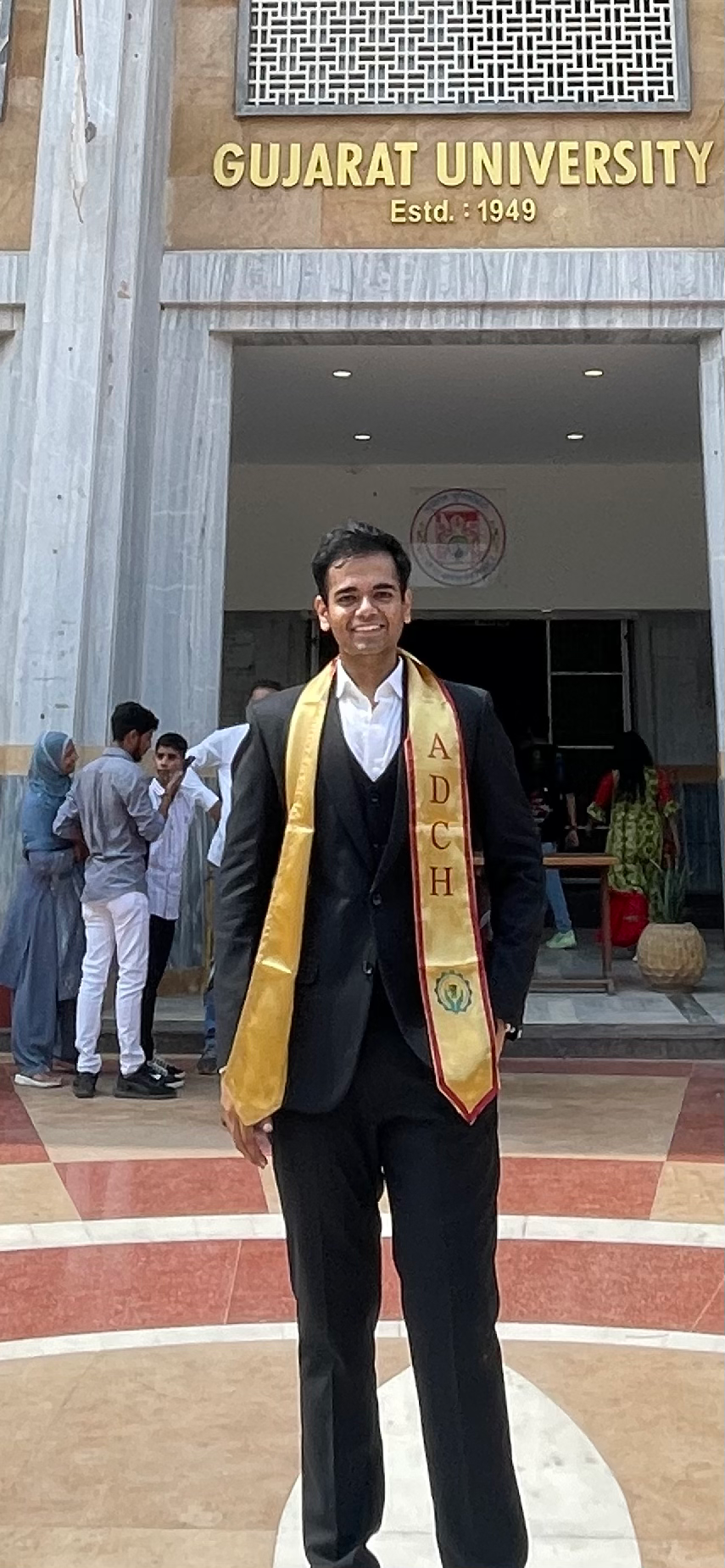
Dr. Dev's personal statement helped him match into Howard University's AEGD Residency Program against all odds. Now he helps international dentists do the same.
He knows what works because he's lived it — and because he's seen what happens when you get it right.


Comments